
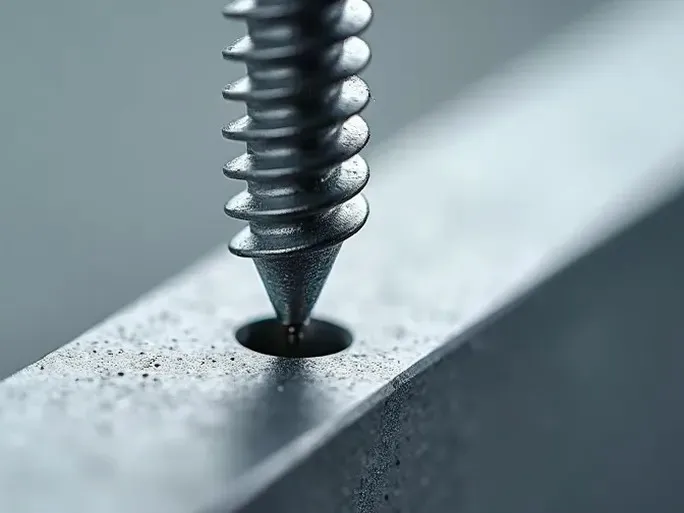
In industrial manufacturing and construction, achieving fast and reliable connections has long been a priority for engineers. Traditional threaded connections often require pre-tapping, a time-consuming and labor-intensive process. The emergence of self-tapping screws has provided an innovative solution to this challenge.
The Innovation of Self-Tapping Screws
Self-tapping screws are fasteners with machine threads that can be directly screwed into untapped pre-drilled holes, cutting matching threads as they’re installed. This design significantly simplifies installation processes and improves work efficiency. Compared to traditional thread-forming screws, self-tapping screws require lower installation torque, making them particularly advantageous for torque-sensitive applications. When properly installed, these screws create tight connections with mating parts, typically eliminating the need for locking washers to prevent loosening.
Cross-Recess Design: Balancing Efficiency and Safety
The cross-recess design, compatible with Phillips screwdrivers, ensures effective torque transmission while minimizing slippage. This configuration also enhances installation stability and success rates.
Zinc-Coated Steel Construction: Enhanced Durability
Manufactured from zinc-coated steel, these screws offer superior corrosion resistance, extending their service life even in humid or corrosive environments.
DIN 7516 Standard: Diverse Options
Available in multiple head configurations to suit various application requirements:
- DIN 7516A: Cross-recess pan head screws provide larger contact area for applications requiring greater clamping force.
- DIN 7516D: Cross-recess countersunk head screws sit flush with the material surface when installed.
- DIN 7516E: Cross-recess raised countersunk head screws combine benefits of both pan and countersunk designs.
Applications Across Industries
Self-tapping screws serve diverse sectors including:
- Electronics (circuit board and component fastening)
- Automotive (interior trim and body panel installation)
- Appliances (housing and internal structure assembly)
- Construction (light structural and decorative material attachment)
Advantages Over Traditional Fastening Methods
Key benefits include:
- Elimination of pre-tapping requirements
- Reduced installation torque
- Secure connections without additional locking mechanisms
- Compatibility with various materials
- Lower production costs through simplified processes
Selection and Installation Considerations
When choosing self-tapping screws, factors to consider include:
- Material compatibility
- Head style requirements
- Proper sizing
- Relevant industry standards
For optimal installation:
- Select appropriate pre-drilled hole sizes
- Use compatible screwdrivers
- Control installation torque
- Avoid over-tightening
Future Developments
As manufacturing and construction technologies advance, demand for efficient fastening solutions continues to grow. Self-tapping screws are positioned to play an increasingly vital role in meeting these evolving connection requirements.