
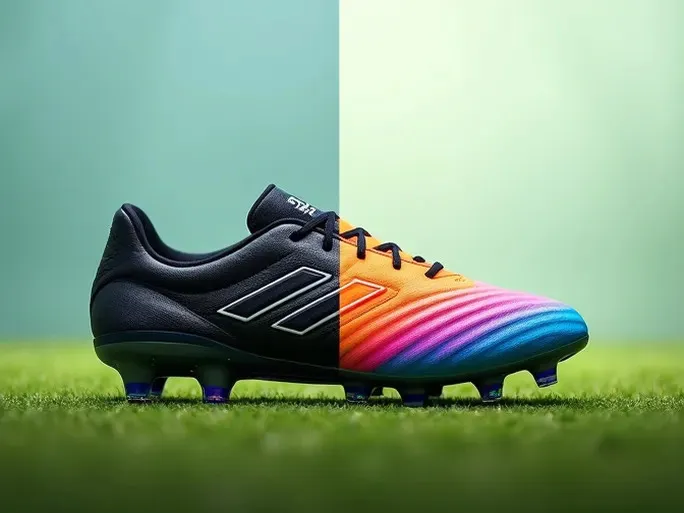
The soccer pitch is a stage where dreams unfold, where speed meets power, and where every precise pass and spectacular shot tells a story. After a torrential downpour, when the field turns muddy and players struggle to maintain footing, one question arises: In today’s era of advanced soccer equipment, do million-dollar professional athletes still opt for traditional metal cleats? The answer is yes, but the reality is far more complex.
Metal cleats haven’t disappeared from professional soccer but now share the spotlight with plastic and hybrid options, creating a diverse selection based on field conditions, player preferences, and safety considerations. This quiet revolution in cleat technology is being driven by sports giants Nike, Adidas, and Puma, whose continuous innovations are not only providing superior equipment but also advancing the sport itself.
Metal Cleats: The Legacy of Traction in Muddy Battles
Traditionally crafted from aluminum or steel, metal cleats excel in soft, wet, or muddy conditions by providing exceptional grip. During winter matches or on poorly maintained natural grass fields, these cleats offer stability during sprints, direction changes, and sudden stops—particularly crucial for defenders engaged in physical battles.
Nike: Blending Heritage with Innovation
Nike’s metal cleat legacy spans from the classic Tiempo series to the modern Phantom line. The company continuously refines cleat shape, length, and configuration while employing advanced materials to enhance durability and corrosion resistance.
Tiempo Series:
Renowned for comfort and touch, the metal-cleat versions combine premium leather with sturdy studs for optimal ball control and stability in challenging conditions.
Phantom Series:
Featuring Flyknit uppers and innovative stud patterns, these cleats deliver superior lockdown and agility while maintaining traction during high-speed maneuvers.
Adidas: Power Meets Precision
Adidas prioritizes high-strength alloys and specialized stud shapes (triangular or polygonal) in cleats like the legendary Copa Mundial and aggressive Predator lines. These designs balance formidable grip with structural integrity.
Puma: Lightweight Agility
Puma distinguishes itself through lightweight alloys and strategic stud placement in its King and Future collections, emphasizing rapid acceleration and nimble footwork without sacrificing traction.
The Rise of Plastic Cleats: Comfort for Modern Pitches
As well-maintained natural grass and artificial turf become standard, molded plastic cleats have gained prominence. Lighter and safer than metal alternatives, they provide sufficient grip on firm surfaces while reducing collision-related injuries—making them ideal for speed-oriented forwards and midfielders.
Nike’s Performance Focus
Utilizing high-grade TPU or nylon, Nike’s Mercurial (speed-focused) and Hypervenom (attack-oriented) lines feature blade or conical studs for explosive movements and precise ball control.
Adidas’ Technological Edge
Adidas incorporates hollow or multi-layer stud constructions in its X (speed) and Nemeziz (agility) series, optimizing weight distribution and traction patterns for enhanced performance.
Puma’s Stylish Approach
Puma combines vibrant aesthetics with functional designs in its One (versatile) and Ultra (speed) models, often collaborating with designers for limited-edition releases that appeal to younger athletes.
Interchangeable Cleats: Adapting to Changing Conditions
For maximum versatility, professionals increasingly opt for cleats with removable stud systems. Players can switch between metal and plastic configurations based on pre-match field assessments, ensuring optimal performance regardless of weather.
Nike’s Tiempo Legend 9 Elite SG-Pro AC:
Features Anti-Clog Traction technology to prevent mud buildup.
Adidas Predator Freak+ FG/AG:
Incorporates DEMONSCALE 2.0 for improved ball control.
Puma Future Z 1.2 FG/AG:
Offers FUZIONFIT+ for customized fit and support.
Safety Regulations: Balancing Performance and Protection
While FIFA permits metal cleats, referees enforce strict safety checks regarding stud sharpness and length. Research indicates certain cleat designs may increase knee and ankle injury risks, prompting manufacturers to prioritize safety innovations.
Manufacturer Safety Measures
Nike:
Implements rounded stud edges, controlled lengths, and secure attachment systems.
Adidas:
Focuses on scientific stud arrangements, impact-absorbing soles, and ergonomic insoles.
Puma:
Emphasizes reinforced collars, breathable yet protective uppers, and responsive cushioning.
Professional Choices: Performance, Comfort, and Sponsorships
Elite players consider multiple factors when selecting cleats:
Field Conditions:
Primary determinant of cleat type
Positional Needs:
Defenders prioritize grip; attackers value speed
Sponsorship Influences:
Brand partnerships often dictate options
Nike’s roster includes Cristiano Ronaldo and Kylian Mbappé; Adidas boasts Lionel Messi and Mohamed Salah; while Puma features Antoine Griezmann and Sergio Agüero—each athlete showcasing their sponsor’s technological advancements.
As cleat technology evolves, players gain increasingly specialized tools to enhance performance while minimizing injury risks. Nike, Adidas, and Puma continue driving this innovation, ensuring soccer’s future holds even more groundbreaking developments in footwear engineering.