
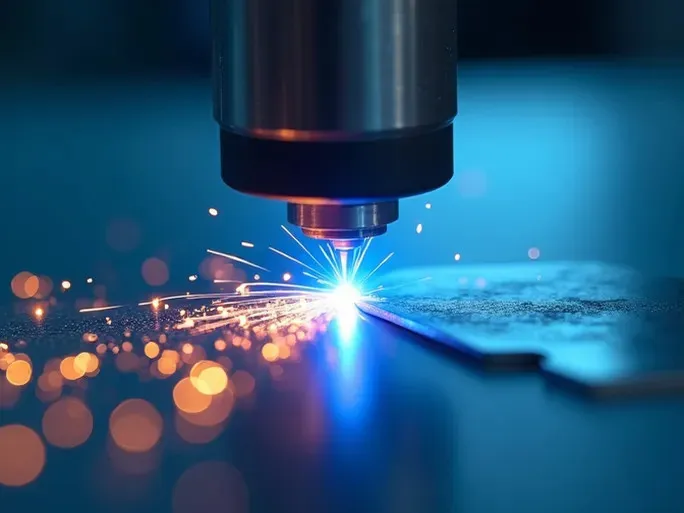
In the relentless pursuit of manufacturing excellence, precision serves as the definitive measure of technological capability. When millimeter-level tolerances become unacceptable, micron and even nanometer-scale precision emerges as the foundation of modern industry. Precision metalworking—a discipline combining cutting-edge technology with artisanal craftsmanship—is driving the future of intelligent manufacturing at an unprecedented pace.
Defining Precision Metalworking and Its Core Value
Precision metalworking refers to the comprehensive set of techniques—including cutting, grinding, and plastic deformation—used to shape metal materials into components with exacting dimensional accuracy and surface quality specifications. At its core lies the relentless pursuit of machining precision, typically requiring tolerances measured in microns (μm) or even nanometers (nm). The materials processed extend beyond conventional metals like steel, aluminum, copper, titanium, and magnesium to include challenging substrates such as superalloys and ceramics.
The growing significance of precision metalworking stems from modern products’ escalating demands for miniaturization, high performance, and reliability. From smartphones and automobiles to medical devices and aerospace components, precisely machined microscopic parts have become ubiquitous. For instance, smartphone interiors contain numerous connectors and circuit board elements measuring just millimeters across—components that must fit together with exacting precision to ensure proper functionality. The slightest dimensional deviation or deformation can compromise performance or cause complete failure.
As product quality, performance, and reliability requirements intensify, precision metalworking’s importance continues its upward trajectory.
Distinguishing Precision from Conventional Metalworking
The most pronounced differences between conventional and precision metalworking lie in their accuracy standards and quality requirements. The following table illustrates key comparative parameters:
| Parameter | Conventional Metalworking | Precision Metalworking |
|---|---|---|
| Accuracy | Millimeter (mm) scale | Micron (μm) to nanometer (nm) scale |
| Tolerance Requirements | Relatively lenient | Extremely stringent |
| Surface Roughness | Visually acceptable | Typically Ra values below single-digit microns with strict specifications |
| Applications | Structural components, large parts | High-performance components, critical parts, micro-scale elements |
Precision metalworking demands highly sophisticated machine tools, measurement equipment, and technicians with specialized expertise.
Primary Precision Metalworking Techniques
Precision metalworking encompasses multiple methodologies, each with distinct advantages and appropriate applications.
Cutting Processes:
These methods remove material from workpieces using cutting tools. Common techniques include:
Turning:
Rotates the workpiece while a cutting tool shapes it, primarily for cylindrical or disk-shaped components.
Milling:
Employs rotating cutters to create flat surfaces, grooves, holes, and other features.
Machining Centers:
Automated systems that change tools and complete complex parts in single operations. Increasing axes (3-axis, 4-axis, 5-axis) enable more intricate geometries.
Grinding Processes:
These abrasive methods remove minute material amounts to achieve exceptional surface finishes and dimensional accuracy:
Surface Grinding:
For flat surfaces
Cylindrical Grinding:
For external cylindrical surfaces
Internal Grinding:
For internal cylindrical surfaces
Electrical Discharge Machining (EDM):
EDM uses controlled sparks between electrode and workpiece to erode material. This method’s primary advantage is its ability to machine any conductive material regardless of hardness:
Wire EDM:
Uses thin conductive wire to cut intricate shapes or micro-holes
Sinker EDM:
Uses shaped electrodes to replicate their form into workpieces
Laser Processing:
High-energy laser beams melt, vaporize, or thermally modify materials. This non-contact method produces minimal heat-affected zones, making it ideal for micro-machining and difficult-to-process materials.
Other Techniques:
Polishing:
Creates mirror-like finishes using abrasives or polishing compounds
Etching:
Uses chemicals or plasma to selectively remove material, commonly in semiconductor fabrication
Application Scope and Component Examples
| Method | Characteristics/Applications | Component Examples |
|---|---|---|
| Cutting | Versatile for most metal components | Automotive parts, aircraft components, molds, medical devices |
| Grinding | High dimensional accuracy and surface finish requirements | Bearings, gears, precision shafts, optical component molds |
| EDM | Hard materials, complex geometries, micro-features, heat-sensitive applications | Mold components, medical implants, aircraft engine parts |
| Laser | Micro-machining, difficult materials, non-contact processing | Medical devices, electronics, automotive and aerospace components |
| Polishing | Mirror finishes or ultra-precise surfaces | Optical lens molds, semiconductor equipment, medical instruments |
| Etching | Ultra-fine patterning or thin-film processing | Semiconductor ICs, MEMS devices, printed circuit boards |
Future Directions in Precision Metalworking
Enhanced Accuracy and Miniaturization:
Advancing technologies will push accuracy requirements higher while component sizes shrink further, making nanometer-scale machining commonplace.
Expanded Material Capabilities:
The field will incorporate more material types including composites, ceramics, and novel alloys.
Intelligent Automation:
Smart manufacturing will become central, with sensors, AI, and machine learning optimizing processes to boost efficiency and reduce costs.
Additive Manufacturing Integration:
Combining 3D printing with precision machining enables new approaches for complex geometries—printing near-net-shape parts followed by precision finishing reduces lead times and expenses.
Sustainable Manufacturing:
Environmental considerations will drive development of eco-friendly methods that minimize energy consumption and waste generation.
Industrial Applications
Aerospace:
Engine components, fuel nozzles, hydraulic system parts
Automotive:
Engine and transmission elements, fuel injection components
Medical:
Implants, surgical tools, diagnostic equipment
Electronics:
Semiconductor devices, connectors, micro-sensors
Optics:
Lenses, mirrors, prisms
Moldmaking:
Tooling for plastic, metal, and ceramic component production
Conclusion
Precision metalworking stands as a cornerstone technology of modern industry, propelling innovation across countless sectors. As demands grow for increasingly accurate, smaller, and more complex components, these techniques will continue advancing to meet manufacturing’s evolving needs. From consumer electronics to space exploration, precision metalworking’s influence permeates every technological domain—not merely as a production methodology, but as an essential driver of progress. Through ongoing innovation and refinement, this field will continue shaping humanity’s technological future.