
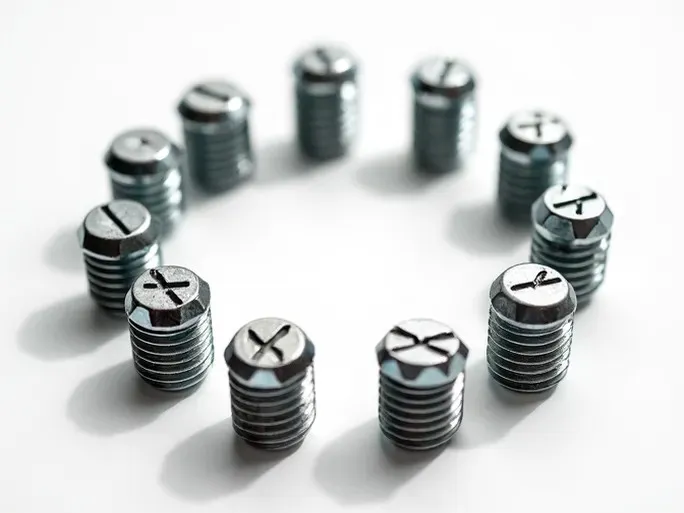
Imagine the consequences if architects selected screws arbitrarily when designing skyscrapers, or if medical device manufacturers disregarded screw head types during assembly. Though small in size, screws serve as indispensable components across industries—from ancient Greek olive presses to today’s precision machinery. The choice of screw head type directly impacts product safety, reliability, and aesthetics. This article explores common screw head configurations and their specialized applications.
Why Screw Head Design Matters
Screw head selection influences installation methods, load distribution, and environmental suitability. An inappropriate choice may compromise structural integrity or create safety hazards. Engineers must understand these variations to ensure optimal performance.
Common Screw Head Types and Applications
1. Socket Head Cap Screws
Featuring a cylindrical head with internal hexagonal drive, these screws accommodate tight spaces while delivering high torque transmission.
- Applications: Machine tools, engine components, precision molds
- Advantages: Space-efficient, high clamping force, streamlined appearance
2. Button Head Socket Cap Screws
With a low-profile domed head, these screws minimize protrusions in clearance-sensitive environments.
- Applications: Equipment panels, lightweight frameworks, safety-critical assemblies
- Advantages: Reduced snagging risk, smooth contour, impact resistance
3. Socket Set Screws
Headless designs with full threading provide precise positional fixation without protruding hardware.
- Applications: Shaft collars, pulley systems, adjustable mechanisms
- Advantages: Flush mounting, micro-adjustment capability, compact form
4. Flat Head Socket Cap Screws
Conical heads countersink flush with surfaces for streamlined profiles and unobstructed movement.
- Applications: Guide rails, sliding components, aesthetic-critical products
- Advantages: Seamless integration, interference prevention, refined finish
5. Hex Head Bolts
The six-sided head design accommodates substantial torque requirements for structural connections.
- Applications: Steel construction, heavy machinery, load-bearing joints
- Advantages: Extreme tensile strength, vibration resistance, field-serviceable
6. Twelve-Point Flange Head Screws
Specialized for aerospace and automotive applications, these combine enhanced torque capacity with load-distributing flanges.
- Applications: Aircraft assemblies, powertrain components, precision instruments
- Advantages: Ultra-high clamping force, stress dispersion, micron-level tolerances
Selection Criteria for Optimal Performance
Key considerations include:
- Required shear and tensile strength
- Available installation space
- Surface finish requirements
- Tool accessibility and drive type
- Environmental exposure conditions
- Lifecycle maintenance needs
From miniature electronics to massive infrastructure projects, proper screw selection remains fundamental to engineering success. Understanding these fastener variations enables designers to balance mechanical requirements with practical installation considerations.