
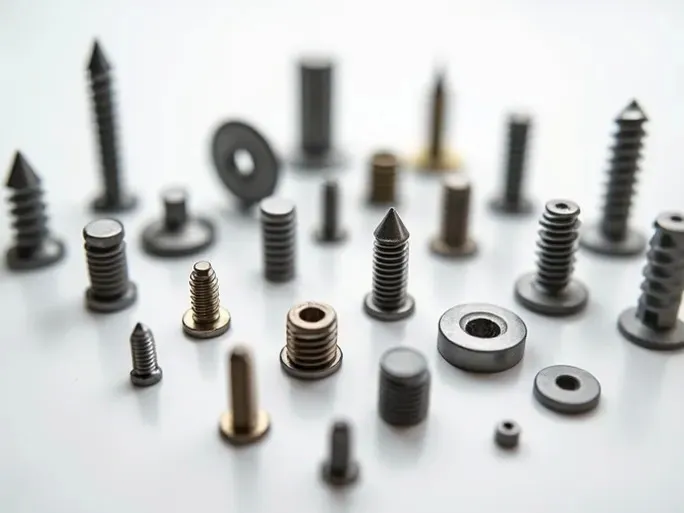
Whether you’re a seasoned professional or a DIY enthusiast, selecting the right screws is crucial for any project. With countless types available, each designed for specific materials and applications, choosing incorrectly can lead to damaged materials, tools, or even safety hazards. This comprehensive guide will help you navigate the world of screws with confidence.
Three Key Factors in Screw Selection
When choosing screws, consider these essential elements:
Screw Type:
Different applications require specific screw types. Using the wrong type may compromise strength or cause damage.
Screw Size:
Length and diameter affect holding power. Oversized screws can split materials, while undersized ones may lack sufficient strength.
Screw Characteristics:
Drive type, head shape, material, threading, and finish all impact performance and suitability.
Anatomy of a Screw
Understanding screw components helps in making informed choices:
Tip:
The leading edge that penetrates material. Self-drilling screws have drill-like tips, while others require pre-drilled holes.
Threads:
Helical ridges that provide grip. Options range from single to double-threaded designs for faster installation.
Head:
Determines drive type (Phillips, Torx, etc.) and how the screw sits on the surface.
Common Screw Types Explained
1. Wood Screws
Designed for wood and wood composites, these feature sharp points for easy penetration and coarse threads for strong holding power.
Pros:
Affordable, widely available, excellent for wood applications
Cons:
May require pilot holes in hardwoods
2. Stainless Steel Screws
Ideal for outdoor use due to superior rust and corrosion resistance. Suitable for wood and metal applications.
Pros:
Weather-resistant, durable in extreme temperatures
Cons:
More expensive than standard screws
3. Deck Screws
Specifically engineered for outdoor decking with weather-resistant coatings and specialized heads for flush installation.
Pros:
Corrosion-resistant, designed for structural integrity
Cons:
Not as corrosion-resistant as stainless steel in marine environments
4. Specialty Screws
Purpose-built for specific applications like furniture assembly (combination screws) or drywall installation (self-sinking screws).
Pros:
Minimize material damage, optimized for particular uses
Cons:
Higher cost than general-purpose screws
5. Double-Threaded Screws
Feature two parallel threads for faster installation and removal, commonly used in wood and masonry applications.
Pros:
Quick installation, strong holding power
Cons:
Typically more expensive than single-thread alternatives
6. Masonry Screws
Heavy-duty fasteners for concrete, brick, and block with deep threads and often hardened steel construction.
Pros:
Exceptional holding power in hard materials
Cons:
Require pre-drilled holes, higher cost
Screw Drive Types
The drive type determines what tool is needed for installation:
Slotted:
Simple flat-head design, prone to cam-out
Phillips:
Cross-shaped, common but can strip under high torque
Pozidriv:
Improved Phillips with additional contact points
Torx:
Star-shaped, excellent torque transmission
Hex:
Six-sided, good for high-torque applications
Screw Head Types
Head shape affects both function and appearance:
Countersunk:
Flush with surface for discreet installation
Bugle:
Rounded countersink ideal for drywall
Pan:
Slightly domed with good torque capacity
Round:
Decorative heads that sit above surface
Key Screw Characteristics
Thread Type:
Fully or partially threaded designs
Length/Diameter:
Must match material thickness and load requirements
Finish/Material:
Determines corrosion resistance and appearance
Color:
Available in various shades for discreet installation
Frequently Asked Questions
What screws are best for brick?
Masonry screws are specifically designed for brick and concrete applications.
What are self-tapping screws?
Screws that create their own threads in soft materials like wood or plastic.
How do you measure screws?
Diameter is measured across thread peaks, length from under the head to the tip.
How to hide screws in wood?
Use countersunk heads with matching wood plugs or decorative caps.