
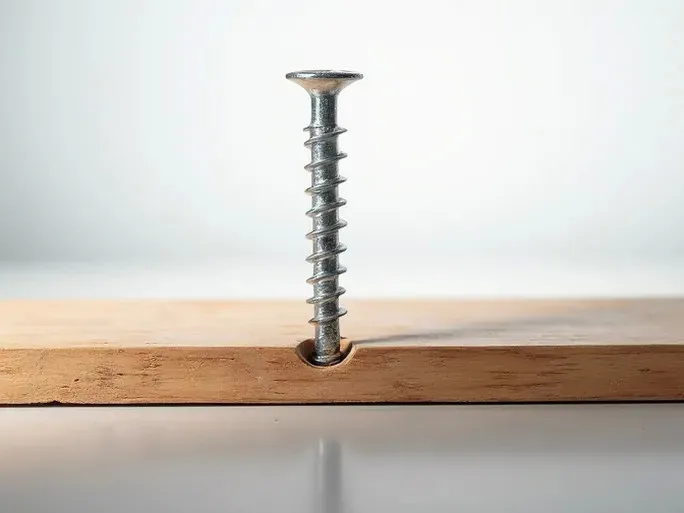
In woodworking and construction projects, screws may seem small, but their role is critical. Choosing the right screws directly impacts a project’s stability and longevity. Among the various types available, long wood screws stand out for their exceptional strength and versatility. This article explores their advantages and highlights key products from industry leaders to help professionals and DIY enthusiasts make informed decisions.
Understanding Wood Screw Sizes
Wood screw dimensions are primarily defined by two parameters: diameter and length.
Diameter (Gauge)
: The gauge indicates a screw’s thickness. Counterintuitively, smaller gauge numbers denote larger diameters—for instance, a #6 screw is thicker than a #4.
Length
: Measured from the material’s surface to the screw’s tip. For flat-head screws, this includes the head; for round or oval heads, measurement starts below the head.
Gauge vs. Length: Distinct Characteristics
Gauge (ranging from #0 to #20) represents the screw shaft’s diameter, with #0 being the smallest for delicate work and #20 suited for heavy-duty tasks. When selecting long wood screws, both factors must be balanced—larger gauges and lengths enhance grip but may require pre-drilling and greater driving force.
Determining Optimal Screw Length
A standard rule of thumb suggests using screws at least twice the thickness of the
thinnest
connected material. For example, a ½-inch board requires 1-inch screws. However, thicker materials or high-stress applications may necessitate extra-long screws. Always consider project-specific requirements.
Advantages of Long Wood Screws
Enhanced Strength
: Deeper penetration provides superior holding power.
Versatility
: Suitable for framing, decking, and diverse structural applications.
Pre-Drilling Optional
: Many modern designs eliminate the need for pilot holes, saving time.
Product Overview: Industry-Leading Solutions
Several specialized long wood screws cater to different needs:
LedgerLOK
Designed specifically for securing deck ledgers to house rim joists, these screws feature sharp tips and cutting threads that eliminate pre-drilling. Available in 3⅝-inch and 5-inch variants, they excel in heavy-load scenarios.
LedgerLOK Flathead
Ideal for flush applications, this variant includes an integrated washer head for added stability and a clean finish. Sizes match the standard LedgerLOK.
HeadLOK
A heavy-duty option with a spider drive system for smooth installation. Ranging from 2⅞ inches to 14 inches, it’s adaptable for decks, drywall, and more.
TimberLOK
Perfect for landscape timbers, fences, and stair stringers, these screws come in 2½-inch to 10-inch lengths and feature self-tapping designs.
FlatLOK
Engineered for multi-layer dimensional lumber, these allow single-sided installation in hard-to-reach areas, with lengths up to 6¾ inches.
VersaLOK
A versatile choice for general construction, offering lengths from 6 to 10 inches and hassle-free installation.
ThruLOK
An innovative alternative to carriage bolts, requiring no wrenches or pre-drilling. Sizes range from 6¼ inches to 9½ inches for structural stability.
Practical Tips for Installation
Pre-Drill When Necessary
: Hardwoods or large screws may still require pilot holes to prevent splitting.
Match Driver Heads
Use the correct bit to avoid stripping screw heads.
Alignment Checks
: Verify wood positioning before driving screws.
Avoid Over-Tightening
: Stop once the head is flush to prevent damage.
Safety Gear
: Wear protective eyewear against debris.
Comparing Fasteners: Screws vs. Alternatives
Nails
: Quick to install but lack holding power for heavy loads.
Bolts
: Offer high strength but require complex installation with tools. Long wood screws strike an optimal balance—providing deep-thread grip, adaptability across materials, and often tool-free installation, making them a preferred choice for most woodworking projects.