
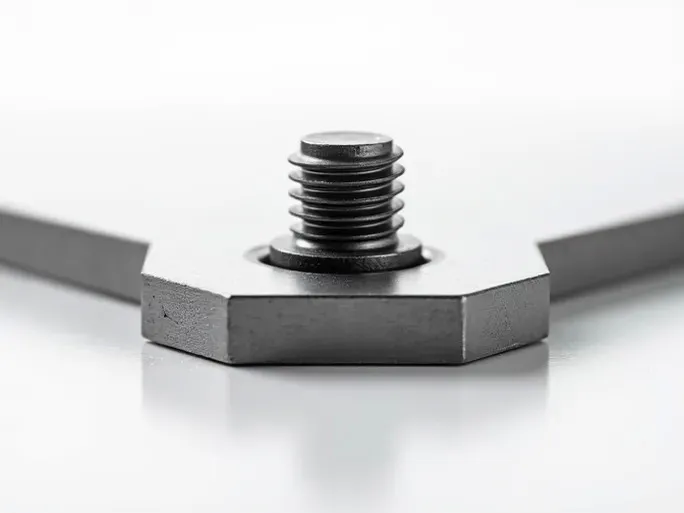
Imagine assembling a precision instrument where every detail matters. Standard screw heads might protrude from surfaces, compromising both aesthetics and functionality. Hex socket countersunk head screws provide an elegant solution, offering robust fastening power while sitting flush with surfaces for a smooth, professional finish. But how do you select the right ones, and what does the DIN 7991 standard signify?
Understanding Hex Socket Countersunk Head Screws
Also known as hex socket cone point set screws, these fasteners feature a conical head with an internal hexagonal drive. This design allows the head to sit completely below the surface of the joined material when tightened, creating seamless transitions. They comply with the German industrial standard DIN 7991, which specifies precise dimensional, material, and mechanical property requirements.
The Significance of DIN 7991 Standard
The DIN 7991 standard guarantees interchangeability and consistent quality. Screws conforming to this standard undergo strict controls for dimensional accuracy, material strength, and surface treatment, ensuring reliable and secure connections. Using DIN 7991-compliant fasteners in engineering and manufacturing helps prevent potential failures caused by substandard components.
Key Advantages
Higher torque capacity:
The hex drive design transmits greater torque without stripping, enabling more secure fastening.
Faster installation:
When used with power tools, these screws install significantly faster than slotted alternatives, improving productivity.
Superior aesthetics:
The countersunk design creates flush surfaces without protrusions, enhancing product appearance.
Improved security:
Requiring specialized tools for removal makes them more tamper-resistant than common slotted screws.
Material Selection Guide
Steel (10.9 grade):
High-strength, heat-treated steel with excellent tensile and yield strength for heavy-load applications.
A2 stainless steel:
Offers good corrosion resistance for humid environments or rust-sensitive applications, though vulnerable to chloride exposure.
A4 stainless steel:
Contains molybdenum for enhanced corrosion resistance, ideal for marine or chemical exposure environments.
Brass:
Provides good conductivity and corrosion resistance, commonly used in electronics and decorative applications.
Aluminum:
Lightweight with good thermal conductivity and corrosion resistance for weight-sensitive applications.
Titanium:
Exceptional strength-to-weight ratio and corrosion resistance for aerospace and medical applications.
Dimensional Specifications (DIN 7991)
| Size | Head Diameter (d2) (mm) | Head Height (k) max. (mm) | Hex Size (S) min. (mm) | Pitch (mm) | Available Lengths (L) |
|---|---|---|---|---|---|
| M2 | 4.0 | 1.2 | 1.27 | 0.40 | From 3mm |
| M2.5 | 5.0 | 1.45 | 1.5 | 0.45 | From 3mm |
| M3 | 6.0 | 1.7 | 2.0 | 0.50 | From 4mm |
| M4 | 8.0 | 2.3 | 2.5 | 0.70 | From 4mm |
| M5 | 10.0 | 2.8 | 3.0 | 0.80 | From 6mm |
| M6 | 12.0 | 3.3 | 4.0 | 1.00 | From 8mm |
| M8 | 16.0 | 4.4 | 5.0 | 1.25 | From 10mm |
| M10 | 20.0 | 5.5 | 6.0 | 1.50 | From 12mm |
Imperial thread options (UNC, UNF, BSW, BSF) are also available beyond metric threads.
Customization Options
For specialized requirements, manufacturers can produce custom screws with non-standard dimensions, unique materials, or special surface treatments based on technical drawings or samples.
Industrial Applications
Machinery:
Connecting components in machine tools, engines, and gearboxes
Electronics:
Securing circuit boards and enclosures
Automotive:
Withstanding high loads and vibrations in chassis and powertrain systems
Aerospace:
Lightweight structural connections in aircraft assemblies
Furniture:
Creating discreet, durable joints in cabinetry and hardware
Procurement Considerations
- Verify DIN 7991 compliance for quality assurance
- Match material properties to environmental and load requirements
- Confirm dimensional compatibility with mating components
- Inspect surface finishes for uniformity and defects
- Source from reputable suppliers with quality certifications
With their unique combination of flush mounting, superior fastening strength, and broad applicability, hex socket countersunk head screws have become indispensable in modern manufacturing. Proper understanding of standards, materials, and specifications enables optimal selection for any application, ensuring both performance and reliability.