
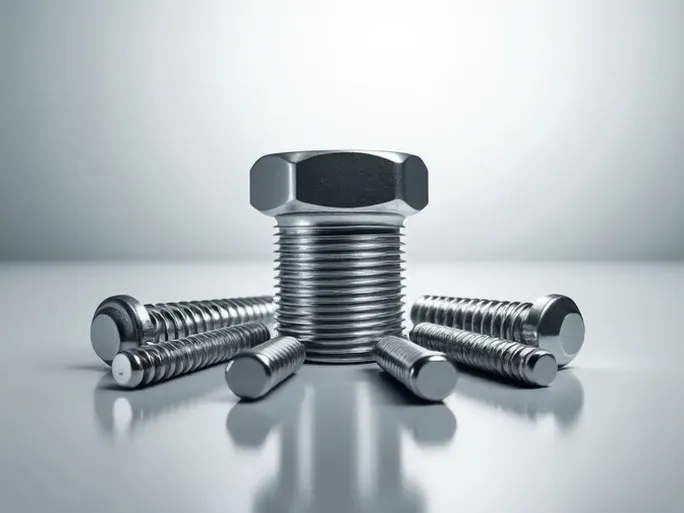
If buildings represent the skeleton of a city, then bolts serve as the crucial joints connecting these structural elements. Yet when attempting to research different bolt types, one often encounters digital dead ends—the modern equivalent of information scarcity. This article aims to bridge that knowledge gap by systematically categorizing bolts, detailing their properties, and outlining practical applications for engineers, designers, and related professionals.
Classification by Head Shape
As fundamental fasteners, bolts come in numerous varieties with diverse applications. The most common classification method examines head shape:
- Hex bolts: Featuring six-sided heads, these provide substantial torque capacity and wrench accessibility, making them ubiquitous in machinery and structural connections.
- Round head bolts: Designed for flush mounting applications, these commonly appear in furniture manufacturing where countersunk connections are required.
- Flat head bolts: Their fully embeddable heads create smooth surface finishes, ideal for applications demanding flush mounting without protrusions.
Thread Variations and Applications
Thread configuration serves as another critical differentiator:
- Coarse threads: With larger pitch measurements, these facilitate quick installation and removal for general-purpose fastening.
- Fine threads: Their tighter pitch enhances vibration resistance, making them preferable for dynamic loading situations.
- Specialty threads: Including trapezoidal variants primarily used in power transmission mechanisms.
Material Considerations
Bolt composition significantly impacts performance characteristics:
- Carbon steel: An economical choice for standard applications in benign environments.
- Alloy steel: Offers enhanced strength and wear resistance for heavy-load or harsh condition applications.
- Stainless steel: Provides superior corrosion resistance for marine or chemically aggressive settings.
Selection Criteria
Proper bolt selection requires evaluating multiple factors:
When joining aluminum components, stainless steel bolts prevent galvanic corrosion. High-stress connections demand alloy steel bolts sized according to load requirements. Frequent disassembly situations benefit from easily manipulated designs like hex head configurations.
Surface Treatments
Various coatings enhance bolt performance:
- Zinc plating: Improves corrosion resistance.
- Nickel plating: Enhances durability and aesthetic appeal.
- Dacromet coating: Provides environmentally friendly corrosion protection.
While appearing simple, bolt selection and application involve substantial technical considerations. Understanding various bolt types’ characteristics and appropriate usage ensures structural integrity and project safety. This comprehensive reference aims to illuminate the often-overlooked complexities of these essential fastening components.