
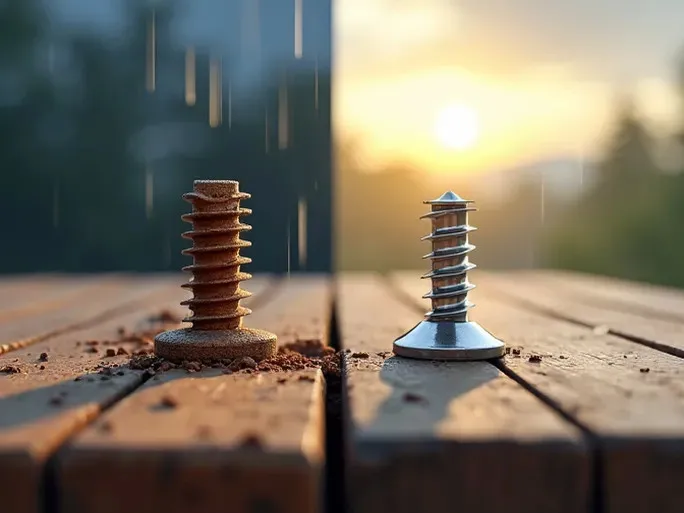
In the world of construction and engineering, one seemingly minor component can make or break a project: fasteners. These small but crucial elements play a pivotal role in determining a structure’s longevity and safety.
The High Cost of Poor Fastener Selection
Consider this scenario: after months of meticulous work on an outdoor wooden structure, heavy rains reveal a devastating truth. The screws holding the structure together show signs of rust and structural compromise. What began as an aesthetic concern quickly escalates into a serious safety issue, potentially rendering the entire project unsafe.
This situation illustrates why fastener selection deserves careful consideration rather than being treated as an afterthought. The right fastener can ensure decades of reliable performance, while the wrong choice may lead to premature failure.
Understanding Fastener Options
Three primary fastener types dominate the market: carbon steel, stainless steel, and bimetallic fasteners. Each offers distinct advantages and limitations that professionals must weigh carefully.
Carbon Steel Fasteners: The Budget-Friendly Option
Composed of steel with 1.2% to 2.1% carbon content, these fasteners offer excellent drilling performance and cost-effectiveness. Their ability to withstand high-speed installation makes them ideal for efficient construction processes.
Advantages:
Cost-effective:
Significantly more affordable than stainless steel alternatives
High strength:
Suitable for high-stress applications with varying carbon content options
Limitations:
Corrosion susceptibility:
Requires protective coatings in humid environments
Environmental restrictions:
Unsuitable for marine or chemically aggressive settings
Carbon steel fasteners perform best in dry, indoor applications such as furniture assembly and interior construction where corrosion resistance isn’t critical.
Stainless Steel Fasteners: Corrosion-Resistant Champions
With over 200 alloy varieties containing at least 10.5% chromium, stainless steel fasteners offer superior corrosion protection. Their polished appearance also enhances visible applications.
Advantages:
Exceptional durability:
Resists rust in harsh environments including coastal areas
Low maintenance:
Requires minimal upkeep over decades of service
Aesthetic appeal:
Maintains polished appearance in visible applications
Considerations:
Higher cost:
Premium materials command higher prices
Installation sensitivity:
Requires careful handling to prevent galling
Stainless steel excels in marine environments, chemical plants, and architectural applications where both performance and appearance matter.
Bimetallic Fasteners: The Best of Both Worlds
These innovative fasteners combine a stainless steel exterior with a carbon steel core, merging corrosion resistance with structural strength.
Key Benefits:
Optimized performance:
Stainless exterior protects against corrosion while carbon steel provides strength
Cost efficiency:
More affordable than full stainless steel options
Versatility:
Suitable for bridges, marine construction, and industrial applications
Selecting the Right Fastener
Four critical factors should guide fastener selection:
Environmental conditions:
Assess exposure to moisture, chemicals, or salt
Budget constraints:
Balance upfront costs against long-term maintenance
Structural requirements:
Consider load-bearing needs and stress factors
Aesthetic considerations:
Determine visibility and desired appearance
Installation and Maintenance Best Practices
Proper installation significantly impacts fastener performance. Key recommendations include:
- Using manufacturer-recommended tools
- Applying correct torque values to prevent under/over-tightening
- Implementing anti-corrosion measures in harsh environments
- Conducting regular inspections for loose or damaged fasteners
Through careful selection, proper installation, and routine maintenance, fasteners can reliably perform their critical role in construction projects for decades. While often overlooked, these small components ultimately determine a structure’s long-term integrity and safety.