
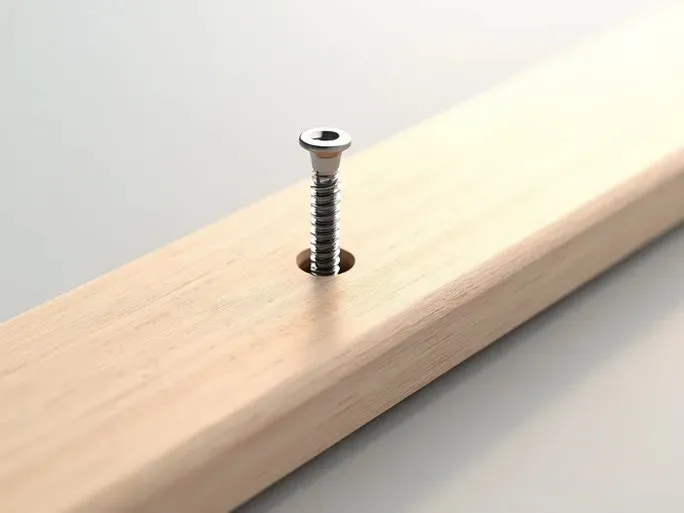
Have you ever noticed how some furniture or equipment features screws that sit perfectly flush with the surface, nearly invisible to the eye? This seamless appearance is made possible by an ingenious engineering solution—the countersunk screw. This article explores the design principles and unique advantages of these specialized fasteners in modern connection technology.
The Design Principle
Countersunk screws, as the name suggests, feature a conical head design. When properly installed into a pre-drilled countersink hole, the screw head sits completely flush with the material surface. This design achieves more than just aesthetic appeal—it eliminates protrusions that could cause snagging or abrasion, while proving essential for applications requiring perfectly smooth surfaces.
Versatile Applications
The utility of countersunk screws spans multiple industries:
Woodworking:
Essential for furniture manufacturing, ensuring flat surfaces that won’t catch fabrics
Metal Fabrication:
Provides strong, visually clean connections between metal sheets
Plastic Manufacturing:
Offers secure fastening without compromising material integrity
Electronics:
Enables compact device assembly with minimal profile interference
Selection Considerations
Choosing the appropriate countersunk screw requires careful evaluation of several factors:
Material:
Options range from carbon steel to stainless steel, selected based on environmental conditions and required strength
Specifications:
Diameter, length, and head angle must precisely match the prepared countersink hole
Surface Treatment:
Coatings like zinc or nickel plating enhance corrosion resistance and visual appeal
Through their innovative concealed design, countersunk screws deliver exceptional performance across countless connection applications. Understanding their engineering principles and proper implementation enables superior product quality and enhanced user experience in both industrial and consumer contexts.