
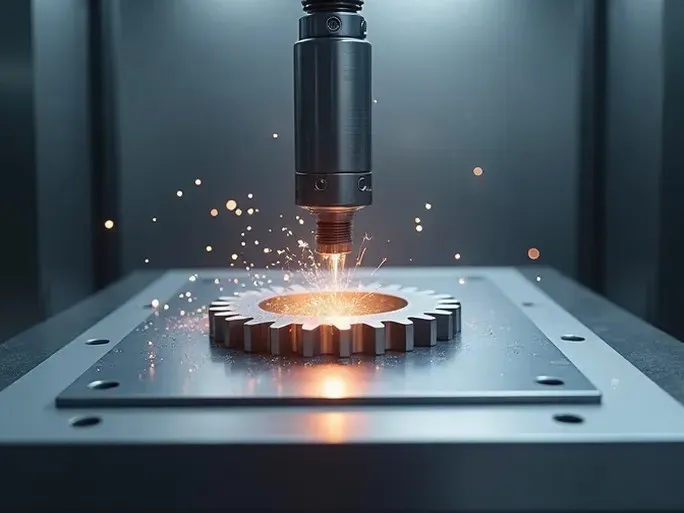
Imagine a cold sheet of metal coming to life in an instant, transformed into a precision component for automobiles, aerospace applications, or electronic devices. This metamorphosis is powered by press machines—not merely mechanical devices but the backbone of modern manufacturing, data flow hubs, and catalysts for efficiency. This article provides a comprehensive, data-driven examination of press machine architecture, functionality, applications, and emerging trends.
Core Components and Data Architecture
1.1 Defining Press Machines: Building a Data Dictionary
Press machines form precision instruments that shape or cut metal materials using dies. To understand their operation, we must first establish a data dictionary cataloging their key components:
| Component | Description | Key Attributes | Data Type | Unit | Criticality |
|---|---|---|---|---|---|
| Base | Stabilizes dies and provides structural support | Material, weight, rigidity, dimensions | Text/Numeric | mm/kg | High |
| Ram (Slide) | Drives upper die in vertical motion | Stroke, speed, guide system type | Numeric/Text | mm/s | High |
| Frame | Absorbs press forces while maintaining stability | Type (C-frame, straight-side, H-frame) | Text | – | High |
| Drive System | Generates pressing force | Type (mechanical/hydraulic), power | Text/Numeric | kW | High |
1.2 Frame Structures: Data Modeling for Stability
The frame’s architecture directly impacts operational precision. Finite element analysis reveals performance characteristics:
C-frame:
Cost-effective for small-medium operations but limited rigidity
Straight-side:
Enhanced stability for heavy-duty applications
H-frame:
Superior strength for extreme tonnage requirements
1.3 Tonnage Selection: Data-Driven Application Matching
Press force requirements vary significantly by operation type:
Blanking:
Force = Material thickness × Shear strength × Perimeter length
Deep drawing:
Requires 20-40% higher tonnage than blanking
Progressive dies:
Cumulative force across all stations
Industrial Applications: Case Studies
2.1 Automotive Manufacturing
The automotive sector consumes 38% of global press machine output. Data analysis reveals:
- Body panel production achieves 0.1mm tolerance at 12 strokes/minute
- High-strength steel forming requires 25% higher tonnage than conventional steel
2.2 Aerospace Precision
Titanium aircraft components demand:
- Micro-tolerance (±0.025mm) press systems
- Isothermal forming at 900°C with specialized heating systems
Future Trends: Predictive Analytics
3.1 Intelligent Press Systems
Machine learning algorithms now enable:
- Real-time process optimization with 92% prediction accuracy
- Predictive maintenance reducing downtime by 40%
3.2 Sustainable Manufacturing
Emerging technologies focus on:
- Energy recovery systems capturing 65% of braking energy
- AI-driven material optimization reducing scrap by 18%
The press machine evolution demonstrates how data analytics transforms industrial equipment from brute-force tools into precision instruments. As smart manufacturing advances, these machines will increasingly serve as data collection nodes, feeding continuous improvement loops across global supply chains.